Monday, March 21, 2016

Will "1893" be a hit in 2016?

While I was working on my Brand Analytics Assignment on Coca-Cola, I was looking at competitors' websites. I was intrigued when I looked at Pepsi-Cola's home page, where they had a photo and short description of their newest product, "1893" cola. This interested me not only because it was relevant to my analysis of Coke's competition, but because it shows how a successful brand has to reinvent itself from time to time in order to have a competitive edge.

Although my research has shown that Coca-Cola is a stronger brand than Pepsi-Cola (and better tasting in my opinion!), Pepsi-Cola is extremely successful as well, and it looks like they are heading in the right direction with this new product. So, what exactly is this 1893 cola? The name sure is interesting.

I did a little research and found an article about 1893 and why Pepsi has decided to launch it. 1893 is made with a "bold combination" of real sugar, sparkling water, and kola nuts to try and give consumers a new and "unexpected" taste. The year 1893 is significant in Pepsi's history because it is the year that Caleb Bradham, a drugstore owner in North Carolina, started selling his own drink known as "Brad's drink", that eventually became Pepsi.

This soda is targeted at millennials, who are said to care about "really long, legally worded brand names". With that in mind, Pepsi is including "from the Makers of PepsiCola" on the packaging below the product name. I think that this is creative and definitely appealing to millennials, especially with the hipster/rustic packaging look. The main reason for the creation and launch of this new product has to do with the long-term decline in soda consumption. I think it is important for Pepsi to consider these social factors, and use them as fuel to come up with new products that will appeal to consumers who are more health conscious, Not only are the ingredients of this new cola appealing to millennials and health-conscious individuals, the packaging has an "earthy" vibe to it. To me, that screams healthy (well in this case, healthier).

This topic reminded me of our constant discussion in class about how brands need to always keep up with the times and change themselves according to what consumers want and need. If consumers shift toward healthier livings, brands need to adjust accordingly. Moving to this new line of soda helps Pepsi stay true to their historical roots and classic nature, while appealing to millennials and working with societal trends. This would have been an interesting element to add to my Brand Analytics Assignment if I weren't writing about their competitor!


Wednesday, March 9, 2016

Worker Experience > Customer Experience?

In a recent article on the American Marketing Association website, Nick Romano, a marketing news writer, discussed how "worker experience" is becoming increasingly important within companies. In class, we are constantly talking about the consumer experience. Even yesterday, my group determined that if we could say one thing about marketing in today's society and how it's evolving, we would say, "consumer". It is so drilled in our minds that as marketers, we must constantly cater to our consumers. What are their wants, needs, and desires? Now, this article is making me question that thinking, and wonder if the worker's experience is just as, or even more important.

So, what exactly is the "worker experience"? The article discusses how millennials are taking over the workforce, accounting for the largest percentage of the U.S. workforce. In addition, "research shows that the majority of millennials want to work in a place where they can make a difference, and that they prefer a collaborative work culture". This is really interesting to me, but not extremely surprising. As a millennial, I agree that a company's work culture is extremely important. At my internship last semester, I worked with individuals who were hardworking, passionate, and enthusiastic about their jobs. Their positive energy made working in the office even better, and inspired me to always do my best work. They also try to do an "office fun night" every few months, to get together with one another and enjoy drinks and appetizers. This company culture is really important because it improves relationships among co-workers and makes working at the company more enjoyable.

I agree with the article regarding the importance of the worker experience. Although the consumer experience has an overwhelming affect on brand equity and value, I can see why worker experience also does. Think about Google. Google is not only a well-known, well-respected brand because of what it offers consumers. Google is also known to be one of the top places in the world to work, having great programs and opportunities for their employees. If a brand pleases both its workers and its consumers, it seems to have it all. This ties back to our discussions about a brand's inner and outer layer matching up with consumers'. In order for a brand to successfully target their consumers and understand their inner and outer layer, they need to improve and understand their own. And, what better way to do so than improving company culture and their work environment.

I found it interesting when the article mentioned the influence that the worker experience has on customer communication. Giving employees more freedom and leeway when it comes to customer communications could in fact lead to positive results. I think that this article was a good read, and it opened my eyes to the fact that there is a lot more to a brand's evaluation than just their ability to provide a memorable and valuable consumer experience. As a soon to be college graduate looking to enter the marketing field, I am happy to see that there is also a strong emphasis on the worker experience as well!


Wednesday, March 2, 2016

Will Consumers Ever Stop Fixating on Price?

This week, we've done a lot of discussion about how pricing can influence marketing strategies. People have varying perspectives on how pricing plays a role in consumers' likelihood to purchase items and re-purchase. We discussed EDLP (everyday low pricing), as opposed to Hi-Lo pricing. Which is more effective? I'd have to say that is subjective, as well as dependent on the particular company enabling the strategy. One of the articles we read was entitled How to Stop Customers from Fixating on price, by Marco Bertini and Luc Wathieu. This article had a lot of interesting information about how marketers can utilize pricing strategies to gain an advantage, and stimulate interest from their consumers.

The article discussed four pricing moves that are perceived to be ways to diminish the salience of price in a purchase transaction. The four moves are; use price structure to clarify your advantage, willfully overprice to stimulate curiosity, partition prices to highlight overlooked benefits, and equalize price points to crystallize personal relevance. Of these four points, I think that the first two are extremely relevant and interesting. In our discussions about marketing strategy, it is always stressed that brands clearly let consumers know what their advantage is. What is your brand's USP that will help gain an edge over competition? Not only is it important to understand it as a brand, it is important that consumers understand it. By using price structure to do this, consumers may get a better understanding about why your brand has an advantage that justifies paying more than what you would pay for a competitor's product.

"Willfully overprice to stimulate curiosity": immediately when I read this, I thought of materialism. Although a lot of consumers are price sensitive, many are also materialistic. Why buy a plain black fleece at the store for $30 if you can pay over $100 to have the North Face label? I'm not really sure. Although I am definitely guilty of leaning toward name brand products, it's kind of silly when you think about it. You are paying a significantly larger amount for a product that might be almost the same. This goes for low-involvement products as well as high involvement products. But, even though "materialistic purchases" could be wasting consumers' money, it is putting a lot of money in the hands of these companies.

What exactly is a materialistic purchase? I'd say, it is when a consumer buys a brand over its competitors because their higher pricing because they think it means it has higher value. This is genius for marketers. Why do you think Apple is so successful? Yes, I think that their products work very well for my personal technological needs, but are they REALLY worth the amount of money I pay? Maybe not. I might just be one of those consumers looking to have the "trendiest" and well-known technology, made by the most popular brand in the industry. This reminds me of groupthink. This is a concept I've learned in a number of marketing courses as well as communication courses. People often make decisions, including purchase decisions (in this case), based on what the group of people around them do. If one person buys the most expensive brand because they think it has the highest quality, their friend might do the same thing. This high price will stimulate curiosity, as stated in the article, and lead to another purchase. That curiosity may lead to extensive W.O.M. among consumers. "Why do you pay so much for Apple products?", might lead to a conversation about why Apple products are so great.

So, I don't think consumers will ever stop "fixating" on price. In a world where people often make money to spend money, it's tough to say that prices won't have a large influence on purchase decisions. But, marketers can use this to their advantage and let pricing aid their marketing strategies.


Monday, February 22, 2016

What's a "PepsiMoji"?

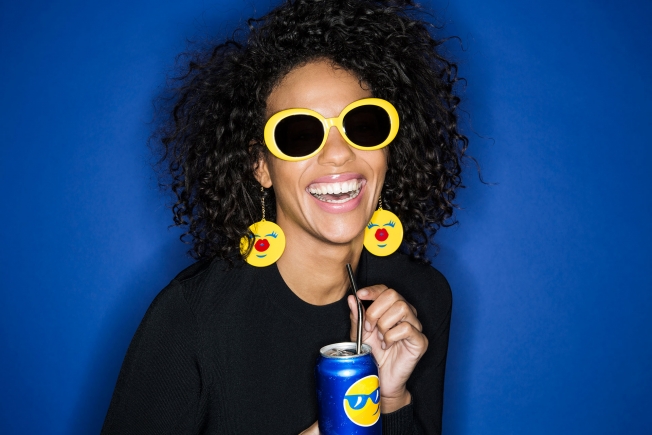
I came across an interesting article on AdAge.com that talks about Pepsi's campaign that will launch globally in the summer of 2016. Consumers will be able to communicate with "PepsiMojis", which are specifically designed emoji cans/bottles.  These will be used to re-design Pepsi's packaging and hopefully increase consumer engagement by encouraging consumers to "Share it with Pepsi". Their competitor, Coca-Cola, was extremely successful with their "Share-A-Coke" packaging campaign this past summer. Pepsi realized that they needed to do something innovative and big to remain at the top of their industry, competing closely with Coca-Cola.

So what are these "PepsiMojis" all about? Pepsi used Canada last summer as a test market, and consumers loved them. They encouraged consumers to tweet pictures of their Pepsi bottle and used the hashtag #Pepsimoji. They even released a keyboard through the Apple App Store to celebrate "World Emoji Day" on July 17th. Pepsi used Canada as their test market because they are a nation that has multiple official languages- which allowed them to really test to see whether or not emojis are a "universal language". According to a presentation done by Pepsi's CEO Indra Nooyi, "more than 2 billion smartphone users globally send 6 billion emojis daily". This shows that Pepsi is following consumer trends and tapping into an area of smartphone technology that not a lot of brands have.

Pepsi also is segmenting consumers in this campaign, as they created emojis specifically for individual markets. For instance, they created one with a "traditional Thai costume" as well as a soccer-inspired emoji. I think this is a creative way of appealing to a wide range of consumers with different cultures and interests. In addition to the new packaging, they also teamed up with a designer named Jeremy Scott to create "PepsiMoji-inspired sunglasses" (photo is below). I think this is really unique and allows consumers to have another touchpoint with the brand and this new campaign.

Not only did I find this article interesting, I am able to make a connection to our course discussions. We have been talking a lot about differentiation, and the debate over how effective or ineffective it actually is. Coca-Cola was the innovator in this situation, as they decided to re-package their cans last summer with different names during their Share-A-Coke campaign. This was a way of differentiating themselves from other competitors within the industry. Now, Pepsi is trying to keep up with the leader in the industry, Coca-Cola, by following suit and doing a similar kind of campaign. This shows that to some extent, you must imitate your competitors' strategies in order to remain competitive. This relates directly to our class discussions from the past few weeks, and shows how it is often important to have points of similarity in addition to the points of difference.


Friday, February 19, 2016

Points of Differentiation and Parity: A Balancing Act

In class this week, we had a lot of discussion about points of differentiation and points of parity. Differentiation is often thought of as the "typical" key to achieving a competitive advantage. However, there is a lot of debate about whether or not differentiation is actually the key to a company's success. It's interesting that we have been discussing this in Marketing Seminar, because in my Business Strategy course we've also been talking about different business strategies and how they yield a competitive advantage. After all of this discussion on the topic, I've come to the realization that businesses must be able to balance points of difference as well as points of parity in order to succeed in today's marketplace. 

One of the articles we had to read for this week was called Three Questions You Need to Ask About Your Brand, by Kevin Lane Keller, Brian Sternthal, and Alice Tybout. This article opened my eyes to the fact that brands really need both differentiation and parity to succeed. Prior to all of these discussions, I always thought that to succeed in the marketplace, you need to have an extremely unique idea- something that no one's thought of before. Think about it, shows like Shark Tank are all about entrepreneurship and coming up with that "genius" idea that will make someone's life so much easier. But, is it really about that? Is coming up with some unheard of product going to create a large profit and business success? After reading this article and discussing it in class, I'm going to have to say no.

In the article, the authors say "conventional wisdom says creating a brand is about differentiating your product. Think again" (81). I thought it was interesting how the word conventional was used, because I do agree that this is the conventional way of thinking. Why would a brand want to enter a market where there are a lot of fierce competitors already? I think the answer is this: consumers buy products they are familiar with. Imagine not only having to create brand awareness and recognition, but having to completely educate consumers on your new product innovation. Personally, I'm the kind of person who isn't fond of change. I stick to products and services I'm comfortable with and fully understand. I'm the kind of consumer that takes some convincing to try a new product. So, how can brands use this to their advantage? They need to figure out what industry they want to enter, and thoroughly investigate their competition.

The article also gave a great example about Motorola failing to launch a new product into the marketplace back in 1994. They created the "Envoy", a personal digital assistant that was supposed to act similarly to a pager. However, this product failed because it "lacked sufficient points of parity to belong to any existing category. Without a clear frame of reference, consumers weren't sure why they should purchase the product" (82).  This example shows how consumers aren't always likely to go outside of their comfort zone.  By understanding an industry and why competitors are succeeding, I think that companies can generate ideas on their product ideas and how they can market them in a way that makes sense to consumers.

The authors suggest that brands ask themselves two important questions when determining whether or not their points of difference are sufficient: "Are they desirable to customers, and can you deliver them?". When you have some genius idea you need to make sure that it is one that customers need and want, and that you're able to follow through with them.

Overall, I thought this article was really interesting and it opened my eyes to the "dangers" of differentiation. It isn't all about being 100% unique in today's marketplace, and brands need to understand that. Being the best doesn't necessarily mean being different or being similar, it takes a balancing act of the two. 

Wednesday, February 10, 2016

The Superbowl is for Advertisements, Right?

I know I'm a few days late, but I wanted to talk about this past Sunday's Superbowl. Because I'm not an avid sports fan and the Patriots didn't make it to the game, watching the Superbowl this year was not thrilling for me. Channeling my inner marketing geek, I always enjoy watching the commercials. I would focus more on the TV when the game was off rather than when it was on (and halftime of course- can't get enough of Beyonce).

There were some pretty good commercials this year, and a few in particular caught my eye. The Doritos Commercial with the puppies going into the grocery store was hilarious, and it used one of the "stereotypical" advertising ideas that we've talked about in class. It seems like brands can always get consumers to interact with their ad if it has a dog or a baby in it. Even though this idea is definitely overdone, it works. At the Superbowl party I was at, everyone was engaged in that commercial and laughing because of the dogs!

This wasn't the only commercial with dogs in it that caught my eye, the Heinz Ketchup commercial was definitely my favorite. The commercial also used cute puppies to get viewers attention, and then had both humor and emotional appeals to it. Using Mini Dachshund puppies, also known as "weiner dogs" to advertise for Ketchup and Mustard is genius to me. I don't know if this is something that has already been done before, but it was new to me. I was laughing at the commercial, and the humor appeal definitely worked. Ketchup and Mustard products are extremely utilitarian in my opinion, and I think that Heinz has to think outside of the box while creating promotional materials. This is an example of a well-established brand having to still engage with consumers, despite their large and loyal following. As we've discussed in class, managing both passive and active loyalists is a key part of a brand's success in marketing. Passive loyalists are useful to a brand because they continuously buy products, but they aren't advocating. Active loyalists not only buy from a brand, they tell other people to do so and are passionate about the brand. By creating this kind of commercial, a passive loyalist of Heinz products, like myself, will start talking about the brand. "Hey, did you see that Heinz commercial with the weiner dogs"? I specifically asked my best friend that, because she has a dog like that and loves them. Next time either of us are in the store shopping for ketchup, Heinz will have top of mind awareness because we will be thinking of their funny Superbowl commercial.

In addition, I referred to the commercial as emotional because although it was humor based, there was some sentiment to it if you are a passionate Mini Dachshund owner. My friend also told me that this commercial made her cry, because it reminded her of her puppy that passed away a few years ago. Although she got sad, she became emotional because of a Heinz commercial- which shows that even very utilitarian products can make you feel something.

I also found it smart that the commercial featured different products within the Heinz brand. I noticed they were promoting regular ketchup, organic ketchup, siracha, and mustard. This was a good way to show that the brand offers a variety of products within the condiment industry. Incorporating the hashtag #MeetTheKetchups was clever and funny. They are creating another touchpoint to social media by using this hashtag. Overall, the Heinz commercial definitely did it for me this year. I know that marketing is the major for me because I care more about Superbowl commercials than I do about the Superbowl itself!

Friday, February 5, 2016

Are Traditional Marketing Concepts Outdated?

This past week in class, we have read a series of articles that examine the traditional marketing concepts people have always gone by. We spent a lot of time questioning how valid these concepts are, and whether or not they should be adjusted. We've talked about what marketing is, and what marketing isn't. I came across this article that discusses how the constantly changing market place in today's day and age leaves some of the "most sacred" marketing concepts out of place.

The article states that "the continued use of antiquated marketing concepts is more of a hazard to managers than a benefit". Wow- is this really true? The "outdated" tool discussed in the article is STP- which is segmentation, targeting, and positioning. These three concepts are important in any company's marketing strategy, which we have learned since Principles of Marketing. So- what makes them so hazardous? The author of this article seems to think that media is developed for mass markets, and that targeting isn't a realistic concept. It also mentions how media focuses on having high reach as opposed to targeting, which I don't necessarily agree with. In our course, we always talk about how marketers need to have high frequency by having many touchpoints throughout the Consumer Decision Journey. In my opinion, I think it is more valuable for a firm to reach a smaller, more targeted group of consumers many times, as opposed to a larger group of less-targeted consumers just once. If marketing is all about developing and maintaining relationships with consumers, why wouldn't targeting continue to help that?

The next idea that the author of the article criticizes is positioning. Traditionally, positioning assumed that marketers' products had to fit in some kind of systematic grid. But, like the article said, "human brains don't have niches of compartments". I agree with this, because I think that the idea of positioning is a bit too generalized. It assumes that a product has to fit in a specific and particular box in order to find a valuable place in the market. This reminded me of our term project last semester working with Marketing Management students. Our group had an extremely different idea of what positioning meant- and their idea of it was extremely systematic.

The article also criticizes how STP "assumes inherently that all product and usage knowledge comes from the product or brand, ignoring such currently important factors as product/service experience... word-of-mouth.." I thought that this statement was spot on. We are continuously taught that marketing products or services is about the experience. This ties into the constantly sought-after idea of emotional connection with consumers. By creating a valuable experience for consumers, they can think positively about your brand, advocate for it, and emotionally connect with it: isn't that the goal here?

Listening to your consumers is a crucial part of being successful in marketing- which I think the article illustrated nicely. It is crazy to think that brands don't listen to their consumers, because how can they effectively reach them that way? Like the article said, "customers and prospects are continuously talking about their needs wants and desires". What better way for marketers to understand these needs, wants, and desires than by simply listening?

Overall, this article related to our course material nicely, and it got me thinking about whether or not traditional marketing concepts are outdated. I think that many of these concepts should be altered or re-looked at as time goes on, but the traditional framework of what marketing is seems to hold true even years later.